Focal Therapies In The Treatment Of Benign Prostatic Hyperplasia (BPH)
(Cryoablation, HIFU, IRE)
To date, there have been no significant differences in treatment efficacy among the minimally invasive surgical techniques developed for benign prostatic hyperplasia (BPH). Studies comparing the success rates of these procedures often conclude that the methods offer similar effectiveness, and their side effects are generally at acceptable levels. Under these circumstances, the focus shifts to selecting the technique with the fewest side effects among those suitable for the patient (in many cases, more than one method may be appropriate).
Focal therapy is a method that differs from all other invasive approaches for BPH in that it does not involve any intervention through the penile urethra. Instead, various energy sources are used to ablate (destroy) the desired portion of the prostate tissue.
Focal therapy can treat BPH as effectively as widely accepted methods such as TURP, Plasmakinetic TURP, or HoLEP, without causing any significant side effects. Additionally, since the penile urethra is not accessed during the procedure, the risk of urethral stricture is avoided—another major advantage.
Compared to many other minimally invasive surgical methods (such as TURP, bipolar-Plasmakinetic TURP, HoLEP), focal therapy offers the following benefits:
- No entry through the penile urethra
- No need for deep (general) anesthesia
- No requirement for hospitalization
- No bleeding during the procedure
- No need for continuous bladder irrigation after catheter placement
- Safe to use in patients with cardiac or brain pacemakers
- A very low risk of retrograde ejaculation after treatment (less than 5%)
When compared specifically with Rezum, a method that has become widely used in clinical practice in recent years due to its low side effects, focal therapies offer all the advantages of Rezum and the added benefit of not requiring any urethral intervention, thus eliminating the risk of urethral stricture.
Energy Sources Used in Focal Therapy
Cryoablation:
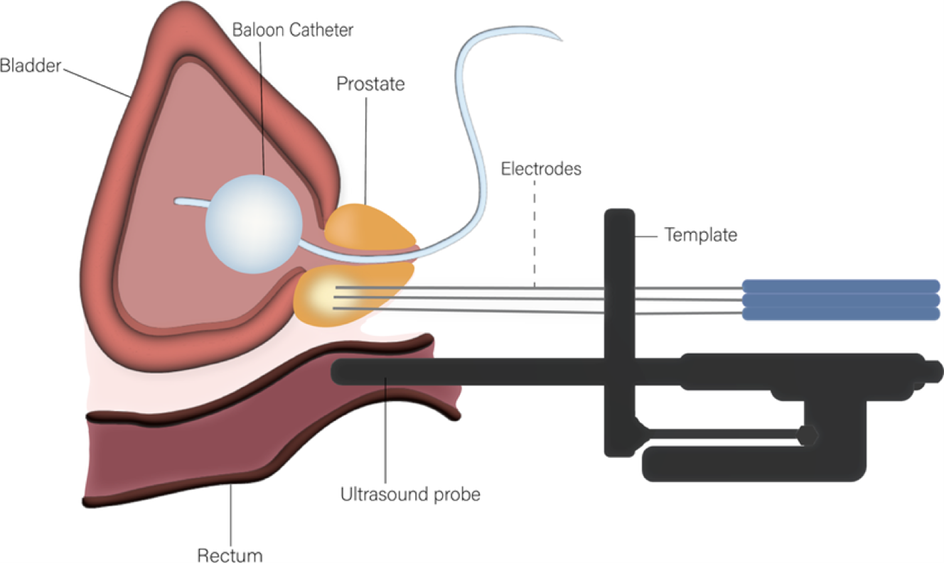
During cryotherapy, thin metal probes are inserted into the prostate through the skin. These probes are filled with a gas that freezes the nearby prostate tissue. While the targeted tissue is destroyed by freezing, surrounding structures such as the sperm ducts, nerves, bladder, and urethra remain unharmed.

IRE (Irreversible Electroporation):
In IRE treatment, thin metal probes are inserted through the skin into the prostate. Strong electrical fields are generated between the probes, causing cell death. This method, known as Irreversible Electroporation (IRE), ablates the desired prostate tissue. Surrounding structures such as the sperm ducts, nerves, bladder, and urethra are preserved.
HIFU (High-Intensity Focused Ultrasound):
HIFU uses high-intensity ultrasound energy to destroy prostate tissue. The sound waves focus on a specific point to generate heat. The energy delivered to a precise spot in the body can raise the temperature to about 90°C within seconds, destroying the tissue. The surrounding tissue remains intact, allowing the targeted treatment to be delivered without damaging nearby healthy prostate tissue.

Cryoablation and IRE (monopolar) have become prominent options in the treatment of BPH because they do not carry the risk of rectal toxicity, unlike HIFU.
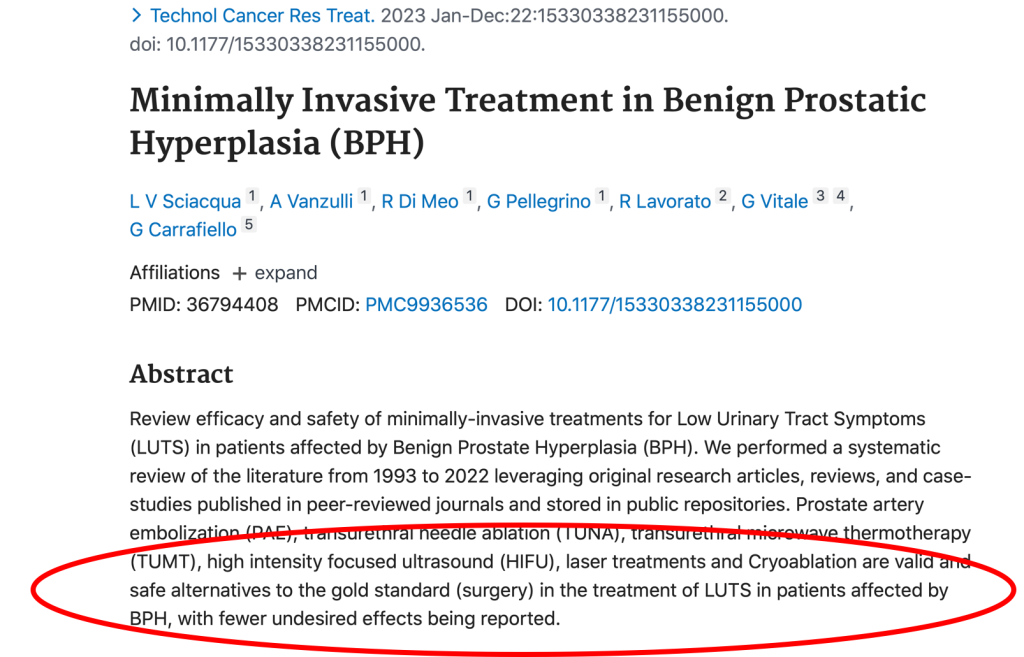
Although there are limited studies in the literature on this subject, the latest meta-analysis published in 2023 reported that these methods are both effective and associated with fewer side effects.